
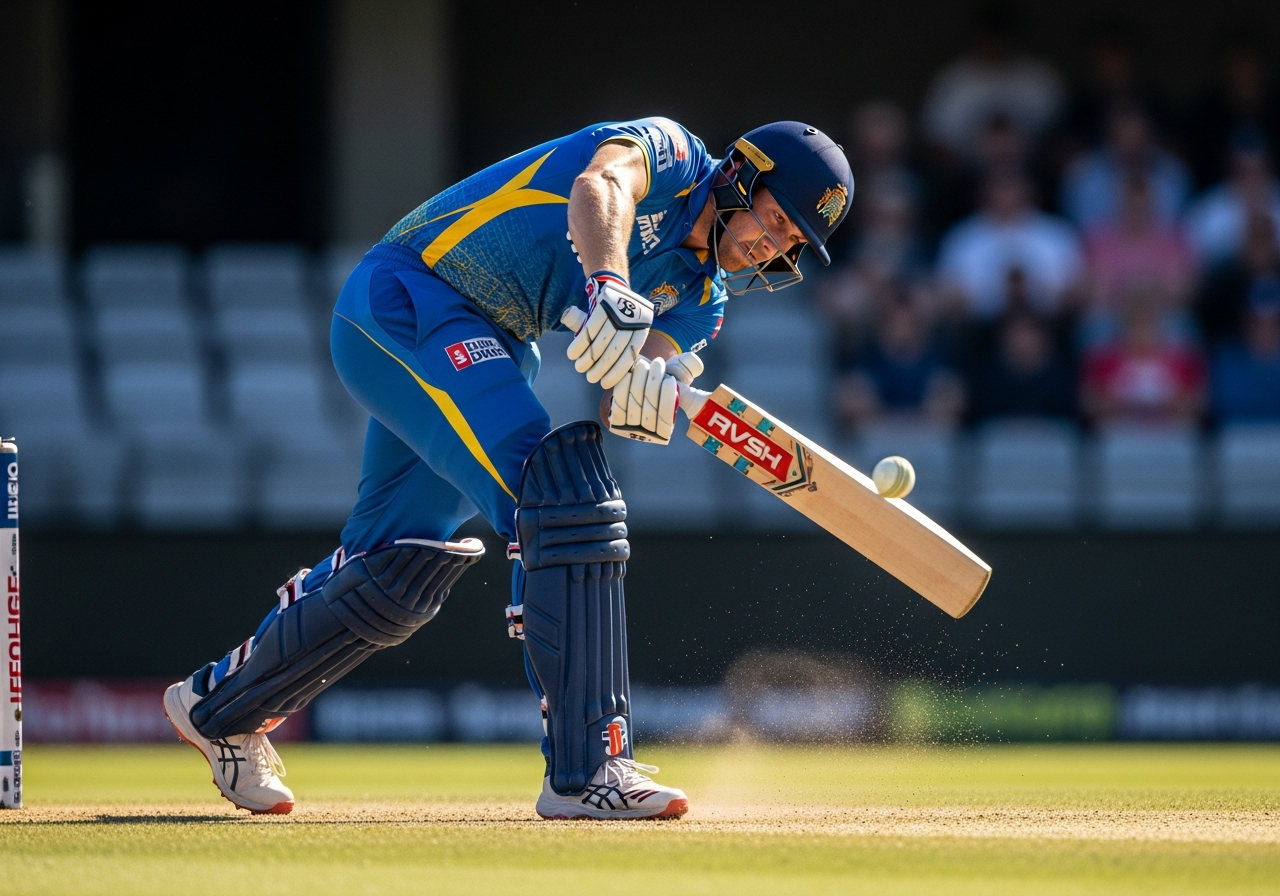
Total runs betting represents one of cricket’s most engaging over/under markets, where you wager on whether the combined match score or individual innings score will exceed or fall short of a bookmaker-set line. Unlike predicting match winners, total runs betting focuses purely on scoring volume, making it particularly appealing for analytical bettors who can read pitch conditions and team dynamics.
India presents a uniquely high-variance cricket market where total runs lines can swing dramatically based on venue characteristics, evening dew, pitch preparation, format selection, and the exceptional batting depth found in domestic leagues like the IPL. This guide takes a practical, analytical approach to understanding how Indian conditions create distinct opportunities and challenges for totals betting, moving beyond generic cricket betting advice to focus specifically on the factors that matter most when betting on runs in Indian cricket.
What total runs betting means in cricket
Total runs betting encompasses several distinct market types, each covering different aspects of match scoring. Match total runs combines both teams’ complete scores, while team totals focus on individual team performance, and innings totals apply to specific batting periods within longer formats.
The fundamental mechanic involves bookmakers setting a line representing their expected total runs for a given market. Bettors then choose whether the actual result will go over or under this predetermined number. Settlement is straightforward: if the line is 320.5 runs and the combined score reaches 321, over bets win regardless of the margin.
Understanding these market variations becomes crucial when betting on Indian cricket, where format diversity and venue characteristics can dramatically alter scoring expectations. A venue that produces 180-run totals in T20 cricket might see 280-run team scores in ODIs, making market selection as important as line evaluation.
Sportsbooks price these lines using statistical models that incorporate historical venue data, team scoring rates, weather forecasts, and pitch reports. The resulting odds reflect not just expected scoring, but also betting volume distribution, creating opportunities for sharp bettors who can identify when market sentiment diverges from actual conditions.
Match total runs vs team total runs vs innings totals
| Market | What it covers | Best use case |
|---|---|---|
| Match Total Runs | Combined score from both teams across all innings | High-scoring venue with balanced teams |
| Team Total Runs | Single team’s complete innings score | Strong batting lineup vs weak bowling |
| First Innings Total | Opening team’s score only | Pitch expected to deteriorate |
| Second Innings Total | Chasing team’s score only | Dew factor favoring second innings |
Consider an IPL match between Chennai Super Kings and Mumbai Indians at Chepauk Stadium. The match total might be set at 340.5 runs, expecting both teams to contribute roughly 170 runs each. However, if CSK’s spin-heavy attack typically restricts visiting teams at home while their batsmen excel on familiar conditions, the CSK team total over 175.5 might offer better value than the match total over.
Market selection becomes particularly important during Indian domestic matches where team strength imbalances are common. A first innings total might be preferable when morning pitch conditions favor batting but afternoon heat and wear are expected to slow scoring significantly.
How over/under lines are priced
Bookmaker lines incorporate half-run increments to eliminate push scenarios where the actual total exactly matches the line. A line of 285.5 runs means over bets require 286 or more runs to win, while under bets win with 285 runs or fewer. This half-run structure ensures every bet produces a clear winner.
The odds attached to these lines reveal expected probability distributions. When a 320.5 run line shows -110 odds for both over and under, the bookmaker estimates roughly equal likelihood of each outcome after accounting for their margin. However, when over bets are priced at -120 while under bets sit at +100, the market expects higher scoring despite the unchanged line.
Indian cricket totals often feature more dramatic odds swings than other markets due to the significant impact of weather, dew, and pitch conditions. A morning line of 350.5 runs at even odds might shift to 340.5 with over bets at +120 if afternoon weather reports suggest evening dew will assist bowlers during the second innings.
Why India matches need a different totals approach
- Venue diversity creates extreme scoring ranges: Indian grounds span from the batting paradise of Chinnaswamy Stadium to the spin-friendly, lower-scoring conditions at Chepauk, requiring venue-specific analysis rather than generic Indian cricket assumptions.
- Dew factor dominance: Evening matches across much of India see significant dew formation that can transform bowling conditions during the second innings, making toss results and chase scenarios more impactful than in other cricket markets.
- Monsoon and seasonal variation: Weather patterns affect not just individual matches but entire tournament phases, with pre-monsoon heat creating flat pitches while post-monsoon conditions often favor bowlers significantly.
- Format-specific venue behavior: The same ground can produce vastly different scoring rates across T20, ODI, and Test formats due to pitch preparation strategies, boundary dimensions, and crowd atmosphere variations throughout different tournaments.
- IPL market efficiency vs domestic gaps: While IPL totals reflect sharp betting markets with extensive data, domestic competitions like Ranji Trophy or Vijay Hazare Trophy often present softer lines due to limited public information and lower betting volumes.
Venue scoring patterns across India
Understanding venue-specific scoring patterns forms the foundation of successful total runs betting in Indian cricket. High-scoring venues like M. Chinnaswamy Stadium in Bangalore consistently produce totals exceeding bookmaker expectations due to short boundaries, flat pitches, and high altitude that helps the ball carry further.
Conversely, traditional spinning venues such as MA Chidambaram Stadium in Chennai or the Brabourne Stadium in Mumbai tend to produce lower-scoring affairs, particularly during day-night matches where dew patterns favor bowlers. These venues often see bookmaker lines set too high based on generic Indian cricket scoring assumptions.
Venue history directly influences how bookmakers set total lines, but recent changes in pitch preparation, boundary dimensions, or playing conditions can create value opportunities. When venues shift groundskeeping approaches or modify boundary positions, historical averages may no longer accurately reflect current scoring potential, creating edges for informed bettors.
Core factors that move the total runs line
| Factor | Impact on totals | What to check |
|---|---|---|
| Pitch grass coverage | More grass = lower totals, pace and bounce | Pre-match pitch reports, curator comments |
| Evening dew formation | Assists chasing team, raises second innings totals | Humidity levels, temperature drops after sunset |
| Team batting depth | Deep lineups increase over probability | Playing XI announcements, all-rounder balance |
| Powerplay strategies | Aggressive starts boost total run potential | Recent powerplay strike rates, field restrictions |
| Toss decision patterns | Bat-first preferences suggest higher totals | Captain tendencies, venue-specific toss strategies |
| Match situation pressure | Tournament stakes affect risk-taking levels | Playoff implications, relegation battles |
Pitch, weather, and dew
Pitch conditions in Indian cricket vary dramatically based on soil composition, grass coverage, and preparation methods. Dry, cracked surfaces typically favor spin bowlers and produce lower totals, while well-watered tracks with minimal grass coverage create batting paradises where totals soar beyond bookmaker expectations.
Weather patterns, particularly humidity and wind conditions, directly affect ball movement and carry. High humidity can cause the ball to swing more during early overs but also leads to dew formation that neutralizes swing later in evening matches. Wind direction impacts boundary-hitting, with strong tail winds potentially adding 20-30 runs to final totals.
Evening dew represents perhaps the most crucial factor in Indian cricket totals, particularly during autumn and winter months. As temperatures drop after sunset, moisture settles on the pitch and outfield, making it difficult for bowlers to grip the ball while reducing swing and seam movement. This phenomenon consistently benefits chasing teams and inflates second innings scoring rates.
Team style, batting depth, and strike rates
Team approach during powerplay overs significantly influences total runs outcomes. Aggressive powerplay strategies that prioritize boundary-hitting over wicket preservation tend to produce higher totals, even when teams lose early wickets. Teams averaging above 8.5 runs per over during powerplays typically exceed bookmaker total lines regardless of middle-order performance.
Batting depth becomes crucial in limited-overs formats where lower-order contributions can determine whether totals go over or under. Teams featuring genuine all-rounders batting at positions 7-8 consistently outperform total run expectations, as these players can maintain aggressive strike rates even during pressure situations.
Recent batting order changes can dramatically affect total runs betting value. When established players move up or down the order, their historical strike rates may not accurately reflect their new role’s scoring potential. Similarly, impact player substitutions in leagues like the IPL can introduce specialist power-hitters who weren’t factored into pre-match total lines.
How to read pre-match totals lines
Pre-match total runs lines reveal bookmaker expectations about match conditions, team strength, and likely game flow. Understanding how to interpret these lines relative to format-specific norms helps identify when market sentiment diverges from actual scoring potential.
Each cricket format features typical total ranges that reflect its structural constraints and scoring patterns. When bookmaker lines fall outside these ranges, they often signal specific conditions or circumstances that warrant closer examination.
The key to reading totals lines lies in understanding what drives deviation from format averages. A T20 total set unusually low suggests difficult batting conditions, while an ODI total set unusually high indicates expected flat pitches and aggressive team approaches.
Line movement between opening and closing represents valuable information about where sharp money flows. When totals drop significantly from opening lines, it often indicates informed betting on difficult conditions or conservative team approaches not initially reflected in the market.
| Format | Typical total range | What the line is telling you |
|---|---|---|
| T20 | 320-380 combined runs | Lines below 320 expect difficult conditions |
| ODI | 500-580 combined runs | Lines above 580 suggest batting paradise |
| Test (per innings) | 280-380 team total | First innings lines reveal pitch expectations |
| IPL | 340-400 combined runs | Higher than regular T20 due to talent depth |
| Domestic T20 | 280-340 combined runs | Lower than IPL, reflecting skill gaps |
What a bookmaker line is really saying
When bookmakers set a total runs line, they’re translating complex probability calculations into a single number that represents their expected outcome. A line of 345.5 runs doesn’t just suggest the most likely total—it represents the point where they estimate equal probability of higher or lower scoring, adjusted for betting margins.
Understanding value requires comparing this bookmaker expectation against your own analysis of match conditions. If venue history, team form, and weather conditions suggest scoring should exceed 360 runs, the 345.5 line potentially offers value on the over, regardless of the odds attached.
The relationship between lines and odds reveals additional information about market confidence. When bookmakers offer plus odds on both sides of a total, it suggests uncertainty about conditions or team approaches. Conversely, heavy juice on both sides indicates high confidence in their line placement but potentially softer betting markets with less informed money.
In-play betting on total runs during India matches
- Track powerplay scoring rates: Compare actual run rates against historical averages for both teams and venue to project final totals more accurately than pre-match lines.
- Monitor weather pattern changes: Cloud cover, wind shifts, and humidity changes can dramatically alter scoring conditions mid-match, creating value on adjusted total lines.
- Assess bowling rotation effectiveness: When key bowlers struggle early, teams often struggle to contain scoring throughout the innings, pushing totals significantly higher.
- Evaluate chase pressure dynamics: Teams chasing large totals often score at unsustainable rates early, while comfortable chases may produce conservative approaches that deflate totals.
- Consider strategic batting depth deployment: Teams may promote power hitters or send night watchmen based on match situation, altering expected scoring patterns for remaining overs.
Signals that can justify an over bet live
- Powerplay scoring exceeds 50 runs: High early scoring often indicates flat pitch conditions that will benefit batsmen throughout the innings, particularly in T20 formats.
- Key bowlers concede 10+ runs per over: When frontline bowlers struggle with line and length, captains typically can’t arrest scoring momentum even with bowling changes.
- Dew formation visible on camera: Once dew becomes apparent on field surfaces, bowling becomes significantly more difficult, typically inflating second innings scoring rates.
- Batting team loses fewer than 2 wickets in first 10 overs: Wickets in hand create platform for aggressive batting during middle and death overs phases.
- Short boundaries being targeted successfully: When batsmen identify favorable boundary dimensions and exploit them consistently, total runs lines often underestimate continued success.
- Field restrictions preventing containment: Powerplay field restrictions that clearly favor batsmen often continue providing advantage during middle overs phase.
When to avoid chasing a live total
Collapsing wickets represent the most dangerous trap for live total betting. When teams lose 3-4 wickets quickly, especially during middle overs, the momentum swing typically continues throughout the innings. Even strong batting lineups struggle to recover from cluster wickets, making over bets extremely risky regardless of early scoring rates.
Pitch deterioration becomes apparent through increasing dot balls and mishit shots. When batsmen begin struggling to time the ball or find gaps in the field, conditions have shifted sufficiently to make pre-collapse scoring rates unsustainable for remaining overs.
Rain interruptions create particular challenges for total runs betting due to Duckworth-Lewis-Stern calculations that may not accurately reflect revised scoring expectations. Weather delays can also alter pitch conditions and eliminate dew factors that were built into pre-match total assessments, making live betting extremely complex during interrupted matches.
Format-by-format totals strategy
| Format | Scoring profile | Totals angle | Main risk |
|---|---|---|---|
| T20 | High variance, explosive potential | Focus on powerplay and death overs | Wicket clusters derailing innings |
| ODI | Steady accumulation with late acceleration | Middle overs run rate sustainability | Conservative approach in middle phase |
| Test | Session-based momentum shifts | Day 1 vs Day 3+ conditions | Pitch deterioration uncertainty |
| IPL | Elite batting depth, aggressive intent | Impact player and strategic matchups | Overestimating venue familiarity |
T20, ODI, and Test match differences
T20 cricket features the highest scoring variance among formats, with totals capable of swinging 40-50 runs based purely on death overs performance. The format’s aggressive nature means powerplay success often predicts total runs more accurately than middle overs performance, making early innings evaluation crucial for live betting.
ODI totals show more predictable progression patterns, with middle overs conservation typically followed by final 10-over acceleration. The format’s length allows teams to recover from poor starts, making team batting depth and venue history more reliable indicators than current run rates during early phases.
Test match innings totals vary dramatically based on pitch conditions and match day, with first innings scores often setting benchmarks for subsequent batting efforts. The same venue can produce 400-run innings on Day 1 and 200-run innings on Day 4, making pitch deterioration rates more important than team batting averages for total runs betting.
IPL and domestic India match totals
- Star player impact magnification: Individual performances from elite batsmen or bowlers can single-handedly swing totals by 30-40 runs, making player availability and recent form crucial factors.
- Strategic timeout momentum shifts: Teams use timeouts to reset approach and often emerge with altered run-rate strategies that can dramatically affect final totals.
- Impact player substitution timing: Strategic use of impact players during different phases can introduce specialist batsmen or bowlers not reflected in pre-match total lines.
- Venue familiarity advantages: Home team knowledge of pitch behavior, boundary dimensions, and crowd factors often provides 10-15 run advantages not fully priced into markets.
- Tournament phase pressure: Playoff qualification scenarios create risk-reward calculations that can lead to unusually aggressive or conservative approaches affecting total runs.
- Auction dynamics reflection: Team composition based on auction strategies creates specific batting or bowling strengths that may not be reflected in season-opening total lines.
Why IPL totals can move fast
IPL totals experience rapid line movements due to the concentration of elite batting talent capable of producing explosive scoring bursts. When players like Jos Buttler, Suryakumar Yadav, or Andre Russell find form, their strike rates can exceed 180-200 for extended periods, pushing totals well beyond bookmaker expectations within just a few overs.
The impact player rule adds strategic complexity that creates live betting opportunities. Teams can substitute specialist batsmen for bowlers (or vice versa) based on match situation, introducing players whose scoring potential wasn’t factored into pre-match assessments. This substitution often occurs at crucial moments when totals betting lines become most valuable.
Toss-driven strategies in IPL matches can immediately signal whether teams plan aggressive or conservative approaches. Captains who elect to bat first despite dew expectations often plan aggressive powerplay strategies, while teams choosing to bowl first typically expect difficult batting conditions that may not be reflected in total runs lines.
How to price domestic matches more cautiously
Domestic cricket competitions outside the IPL typically feature softer totals betting markets due to limited public information and lower betting volumes. However, this creates both opportunities and risks, as bookmaker lines may be less sharp but information about team news, pitch conditions, and player availability is often incomplete or unreliable.
Player quality gaps in domestic cricket create higher variance in individual performances that can dramatically affect totals. Unknown players may produce career-best innings or bowling figures that swing totals far beyond typical ranges, making conservative position sizing essential when data quality is questionable.
Venue information becomes more critical and harder to obtain for domestic matches. Many grounds lack extensive historical data, weather monitoring, or detailed pitch reports, requiring more conservative assumptions about scoring conditions and greater emphasis on live adjustment strategies rather than pre-match positioning.
Common mistakes bettors make with total runs
| Mistake | Why it hurts | Better approach |
|---|---|---|
| Chasing yesterday’s scores | Previous match conditions rarely repeat exactly | Focus on current pitch, weather, team changes |
| Ignoring toss impact | Batting first vs chasing creates different pressure dynamics | Adjust expectations based on innings context |
| Overweighting star players | Individual brilliance doesn’t guarantee team totals | Consider overall batting depth and bowling quality |
| Live betting on emotion | Momentum swings can reverse quickly in cricket | Stick to pre-planned live betting triggers |
| Venue averaging without context | Pitch preparation and conditions vary significantly | Weight recent matches and similar conditions more heavily |
| Ignoring bowling matchups | Strong bowling can contain even the best batting lineups | Analyze bowler form and batting team vulnerabilities |
Biases that distort totals decisions
Home team bias leads many bettors to overestimate familiar players’ scoring ability while underestimating visiting team potential. This bias becomes particularly pronounced in IPL matches where local crowd support creates perceived advantages that may not translate into actual scoring benefits, especially when pitch conditions favor bowlers regardless of crowd atmosphere.
Star player bias causes bettors to anchor total runs expectations around marquee names without considering team batting depth or bowling opposition quality. A team featuring Virat Kohli and AB de Villiers might still struggle to reach high totals if their middle order lacks experience or if opposition bowlers target their specific weaknesses effectively.
Recency bias from impressive recent performances often distorts total runs assessments when conditions change significantly. A team that scored 200+ runs in their previous match may struggle to reach 160 if venue characteristics, pitch conditions, or opposition bowling strategies differ substantially from their recent success.
A simple totals betting checklist for India
- Verify venue scoring history: Check recent matches at the same ground, focusing on similar format, season, and team strength comparisons.
- Assess current weather conditions: Temperature, humidity, cloud cover, and wind direction all directly impact scoring potential and bowling effectiveness.
- Analyze team news and batting orders: Late changes to playing XI or batting positions can significantly alter scoring expectations from pre-match assessments.
- Calculate fair total estimate: Use venue averages, team scoring rates, and condition adjustments to develop independent total expectation before comparing to bookmaker lines.
- Monitor line movement and odds: Significant changes from opening lines often signal informed money or important news about conditions or team news.
Pre-match checklist
- Research venue pitch report and curator comments: Official statements about pitch preparation, grass coverage, and expected behavior provide crucial baseline information.
- Check weather forecast including humidity and dew point: Evening matches require particular attention to temperature drops and moisture formation expectations.
- Confirm final team selections and batting order: Late changes can dramatically alter scoring potential, particularly when key players are rested or batting positions shuffle.
- Review recent team scoring patterns in similar conditions: Focus on matches played in similar venues, weather, and competitive situations rather than overall season averages.
- Assess toss importance based on venue history: Some grounds heavily favor batting first or second, making toss results crucial for total runs outcomes.
- Calculate implied total from your analysis vs bookmaker line: Develop independent expectation before considering market pricing to identify potential value opportunities.
Live checklist
- Track actual run rate vs venue average: Significant deviations in early overs often predict whether totals will exceed or fall short of pre-match expectations.
- Monitor wicket timing and batting order disruption: Early wickets to key players typically deflate totals while late wickets may have minimal impact depending on batting depth.
- Observe field setting changes and bowling effectiveness: Defensive fields or frequent bowling changes suggest totals tracking higher than expected, while attacking fields indicate confidence in containing scoring.
- Note visible condition changes like dew formation: Physical evidence of changing conditions often creates immediate value in live total markets before widespread recognition.
- Assess chase pressure and required run rate dynamics: Teams chasing large totals often abandon conservative approaches, inflating second innings scores beyond sustainable rates.
- Consider strategic timeout usage and momentum shifts: Teams often emerge from timeouts with altered approaches that can significantly affect scoring rates for remaining overs.